
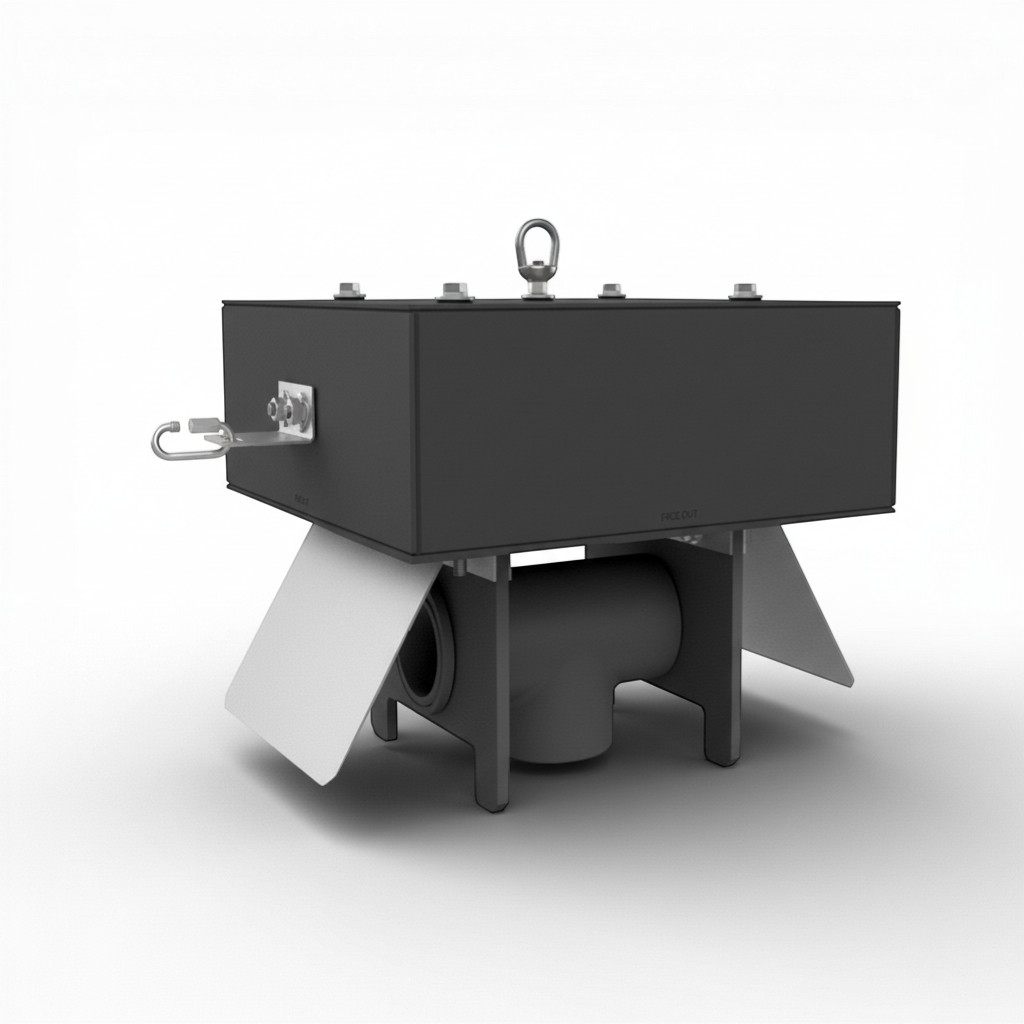
Smart Decanting That Moves With Your Process
How it Works
The Floating Decanter for backwash water reclaim, when paired with a reclaim pump, automatic valves, and controls, is used to remove supernatant from backwash water reclaim tanks after the residual solids have settled. The decanter floats on the surface of the water, and after a predetermined amount of time has passed, and adequate settling of the residual solids is achieved, a control panel activates a reclaim pump. The clarified water is then drawn down to a fixed distance above the top of the residual solids blanket and is pumped back to the filter system. The floating decanter assembly and reclaim pump shall remove the supernatant without disturbing the layer of accumulated residual solids below.
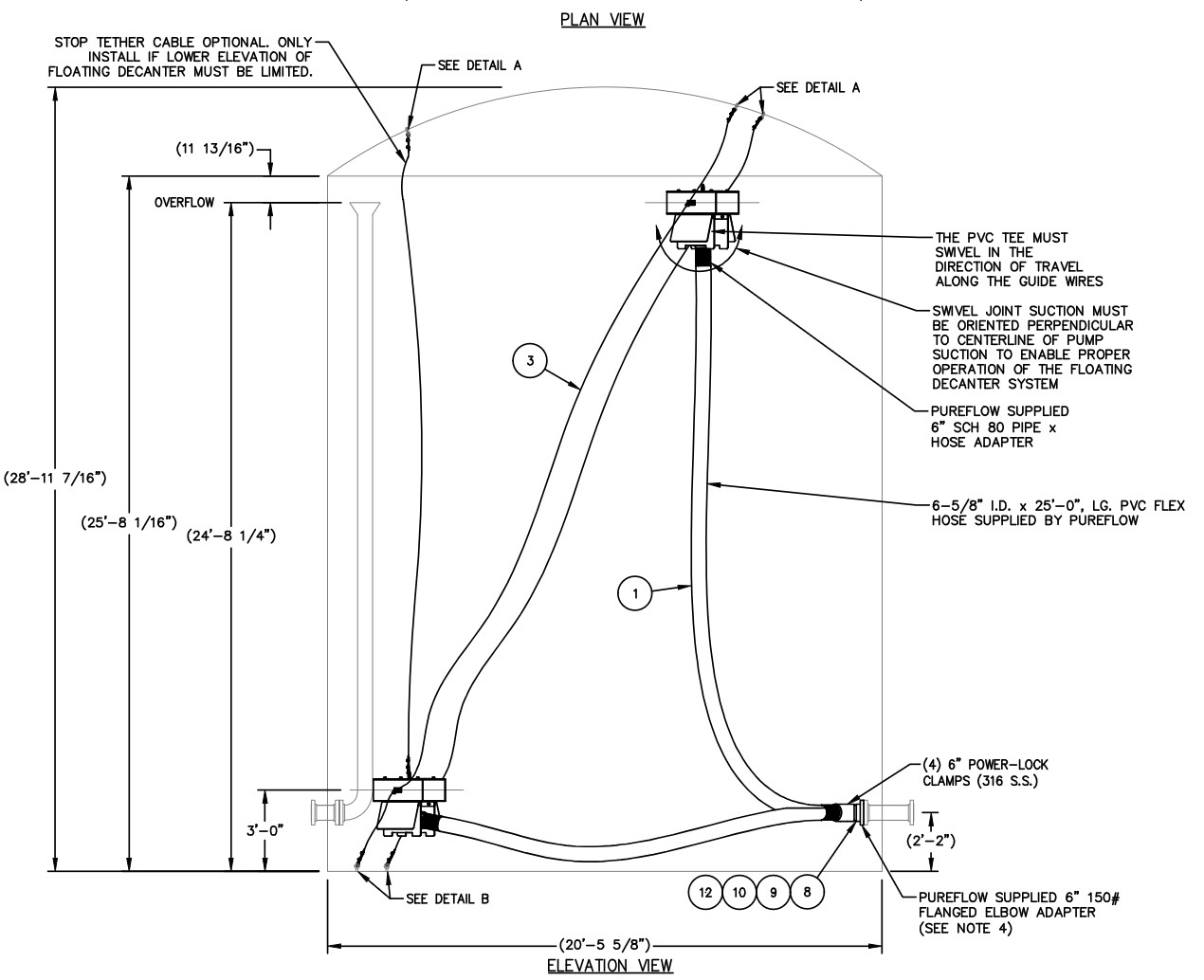
Specification
SECTION 46 41 13 (clarifier equipment)
SECTION 46 07 13 (packaged water treatment system)
FLOATING DECANTER ASSEMBLY
PART 1 – GENERAL
SUMMARY
A. Provide floating decanter assembly complete with all required components, accessories, and appurtenances for installation in reclaim/storage tanks.
B. Work includes decanter body, support legs, suction line, hose clamps, fittings, and installation accessories.
SUBMITTALS
A. Product Data: Manufacturer’s specifications, materials of construction, and performance data.
B. Shop Drawings: Application-specific drawing indicating dimensions, tank interface, and installation details.
C. Operation and Maintenance Data: Manufacturer recommendations for inspection and maintenance.
QUALITY ASSURANCE
A. Manufacturer shall have demonstrated experience in fabrication of water treatment equipment.
B. Equipment shall be fabricated in the United States.
DELIVERY, STORAGE, AND HANDLING
A. Protect all components from damage during shipment and storage.
B. Store in a clean, dry location.
PART 2 – PRODUCTS
2.01 MANUFACTURER
A. Acceptable Manufacturer: Pureflow Filtration Division, Whittier, California.
B. Substitutions: Not permitted without approval.
2.02 MATERIALS AND FABRICATION
A. The floating decanter assembly shall be constructed solely of materials resistant to corrosion caused by continuous submersion in water containing metal oxides, chlorine, and residual solids.
B. All wetted metallic components and hardware shall be Type 316L stainless steel.
C. Decanter body shall be flush welded at all seams to form a fully watertight enclosure.
D. All penetrations through the decanter body shall be sealed to maintain watertight integrity.
2.03 DECANTER BODY AND SUPPORT
A. Decanter body shall be sized to pass through the existing tank hatch opening.
B. Decanter shall be self-supporting and provided with four (4) legs.
C. Each leg shall be fitted with a permanent rubber cap to prevent damage to tank surfaces while not [text incomplete in source].
D. Decanter shall remain level on all planes at all operating and low water levels.
E. Connection to the suction line shall allow free movement and prevent rotation or overturning of the decanter.
2.04 HYDRAULIC PERFORMANCE AND CAPACITY
A. Maximum flow capacity: ___ gpm.
B. Decanter inlet shall be designed to inhibit vortex formation.
C. Assembly shall prevent air entrainment and mitigate risk of pump cavitation.
D. Decanter design shall prevent air entrapment within the suction line during operation and draining conditions.
2.05 SUCTION PIPING AND HOSE
A. Provide flexible reinforced suction hose and/or rigid piping as required for installation.
B. Hose shall meet the following minimum requirements:
- Vacuum rating: 28 inches mercury
- Working pressure: 30 psi minimum
- Construction: PVC hose with PVC helix reinforcement
- Interior: Smooth bore
- Exterior: Corrugated
- Sizing: Compatible with standard pipe outside diameters (“pipe-sized”)
2.06 HOSE CLAMPS AND CONNECTIONS
A. Provide minimum of two (2) spiral, pipe-sized, double-bolt hose clamps per connection.
B. Clamps shall be contoured to match hose exterior profile.
C. Provide all required hardware for secure installation.
2.07 ACCESSORIES AND CONFIGURATION
A. Provide mounting and interface hardware suitable for tank configuration, including flat-bottom or sloped-bottom tanks.
B. Assembly shall allow free movement within tank without interference with appurtenances.